
What Michelle, My Schwinn Predator, and Chinese Medicine Taught Me About Pain
Michelle was the cutest girl in my fifth grade class. I had a Predator (not that type of predator). It was the Schwinn Predator, the sweetest dirt bike ever made. Michelle and I had the same walk home. She would walk with her best friends Tara and Denise. She wore a Punky Brewster backpack and was into shredded t-shirts. She was real bad ass 80’s hot!
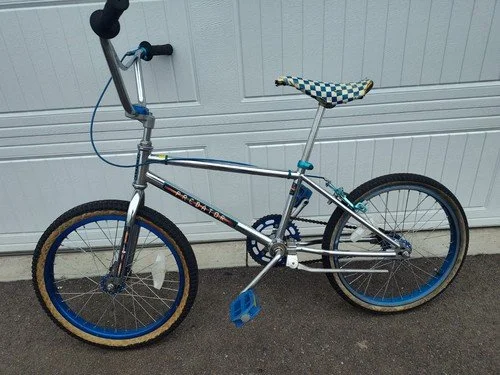



So my fifth grade brilliant way of flirting was that I would ride my bike really fast past her. When I flew by I would look over with a smile and think there was no one more awesome than Gabriel Sher. This was an everyday thing. Not sure why I thought this would be more successful than stopping and talking but this was my 5th grade game and I was sticking to it.
One day I rode really fast past her, stood up on both pedals and pulled a Titanic chest out, gliding at top speed.
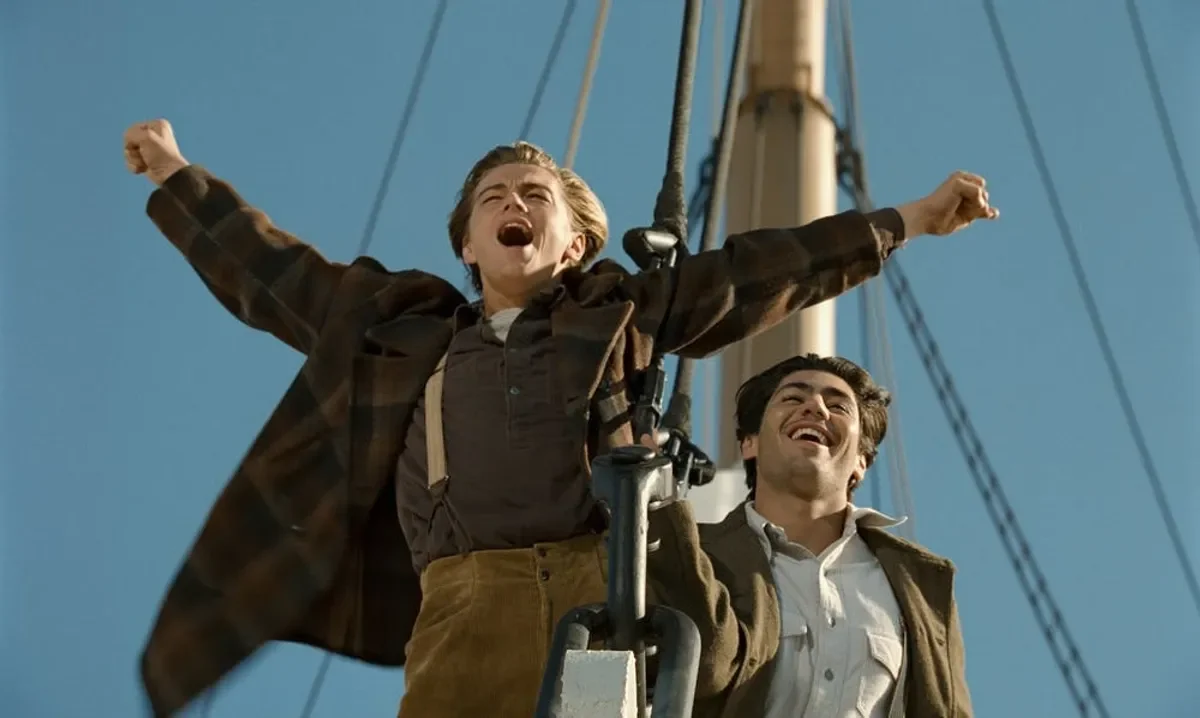
It was amazing (trust me). The problem is, when I brought my foot up I accidentally kicked the chain which flipped off and got caught in my bike wheel which put a very sudden stop to my momentum. I (me, my bike and Leonardo Dicaprio) stopped very very abruptly and I flipped up into the air. The flip part was amazing, the landing not so much.
Splattered on the ground, I looked up and saw Michelle. “Gabriel, are you ok? That was the coolest flip ever.” Yah, it was pretty awesome (I thought in my head “I did it for you”) but the only problem was that I was definitely injured in many places and wasn't sure which part hurt the most. I got up and made sure my Lee jeans were ok (that was the most important). I knew my knees were bleeding underneath but I would deal with that later. I needed to be tough, cool and bad ass right now. As far as I was concerned, I meant to do that!
I walked my bike home with the chain hanging off. I got home, took off my Lee jeans and saw my knees were bleeding everywhere. I couldn’t feel my right arm but hoped that it would just go away.
At the fancy Sher family dinner we had mac and cheese, cottage cheese and canned fruit. My dad asked me how my day was. I said it was good, nothing really happened (other than me being an idiot and trying to Evel Knievel on my Predator just to get a girl's attention, which will clearly be the last time I do something stupid to get a girl's attention). He nudged me with his arm to pass the canned fruit and I gasped as he made contact with my right arm.

He looked at me and I came clean, not about me trying to be bad ass in front of Michelle, not about my no-hands Titanic move, but about the chain and how I was being super careful, riding slowly, and the chain fell off on its own. The Truth!
After a long night at the hospital, an x-ray and a cast, I was able to walk home from school holding Michelle's left hand for the rest of the school year. It was obviously all worth it.
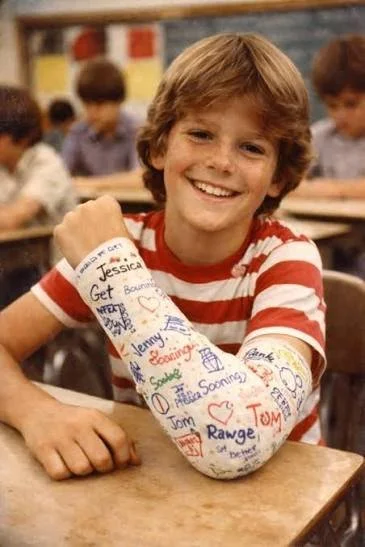
(not me, my understudy who bears a remarkable likeness to me)
In Chinese medicine, we pay a lot of attention to what happens when the body’s normal flow is disrupted. A broken bone or any kind of injury can cause Qi and Blood to become stagnant, which can lead to pain, stiffness, swelling, weakness, or a feeling that something just isn’t moving the way it should. Sometimes the body immediately lets you know something is wrong (like with a broken bone). Other times, adrenaline, excitement, or simply the desire to keep going can temporarily override those signals. You can convince yourself, “I’m fine,” while your body is saying something completely different.
That’s something I see all the time in my acupuncture practice. Someone comes in with neck pain and tells me, “It’s not that bad. I can still work.” Or someone has been dealing with low back pain for months and has simply adjusted the way they sit, walk, exercise, or sleep. They’ve gotten very good at compensating. The problem is that compensation isn’t the same thing as healing. When we keep pushing through pain, the body can develop patterns of tension and restriction that become harder to get rid of.
My fifth-grade self had a very sophisticated treatment plan: walk the bike home, hide the bloody knees, and hope the arm starts working again. Fortunately, my father noticed that something was wrong. That’s an important lesson in Chinese medicine too: don’t wait until your body has to scream before you listen to it. Pain, stiffness, fatigue, tension, and changes in movement are often signals worth paying attention to. Acupuncture can be one way of helping the body restore movement, reduce tension, and get back toward balance—but sometimes the most important first step is simply admitting, “Okay…something isn’t right.”
And maybe, just maybe, stopping the bike and having a conversation with Michelle would have been a better strategy.